
I planted my first willow bed in February 2023 and I wrote a number of blogs about it here. It has now been established for three years, which has flown by. The first two harvests were great, and I had no issues with the willow growing. But 2025 was challenging in new ways. So I thought I would reflect on the growing season and subsequent harvest. Read on to learn more!
Overview of the 2025 Growing Season
As I mentioned above, there were a few challenges with the willow this year: drought and cattle.
1. Drought
For many, 2025 was a difficult growing season and even more so for livestock farmers. There was a warm start to the year, with almost no rainfall. A drought was declared for Herefordshire in mid-July. This followed the driest Spring in 132 years, according to the Met Office.
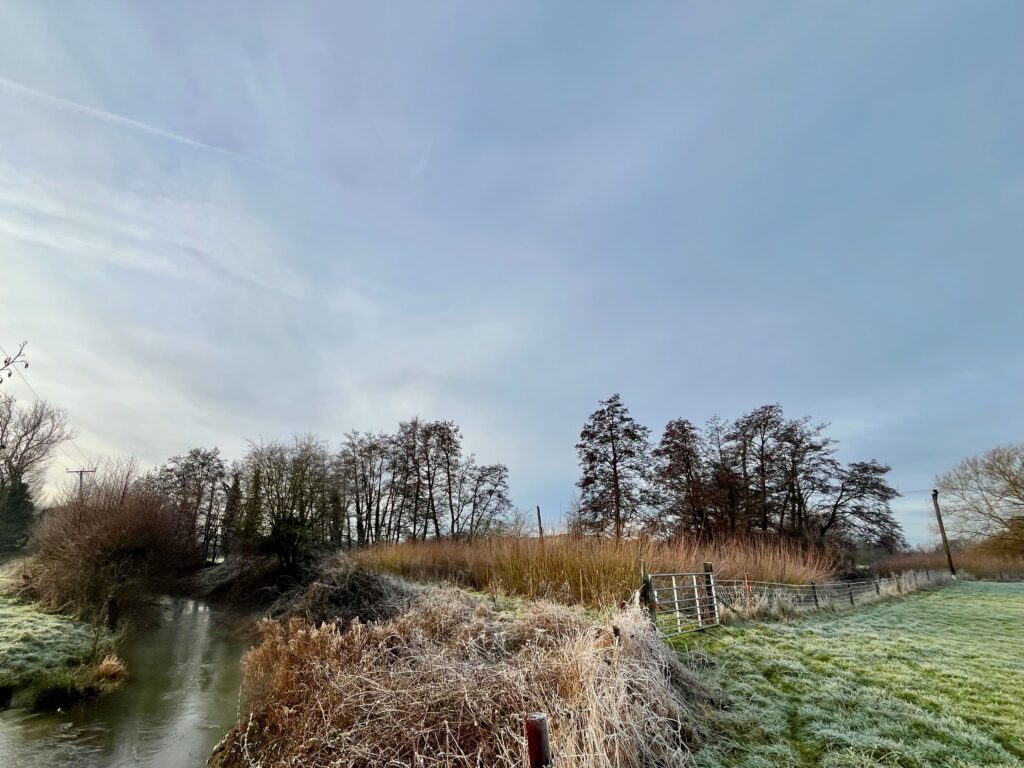
Luckily I planted my willow in 2023, so it was already well established and is on a bend of the Pinsley Brook, a tributary of the River Lugg. Two out of three sides are bordered by water. Along with being planted on an old muck tump, in our heavy clay soil, my basketry willows were still thriving by the time a drought was declared. So in itself, not too bad. But…
2. Cattle
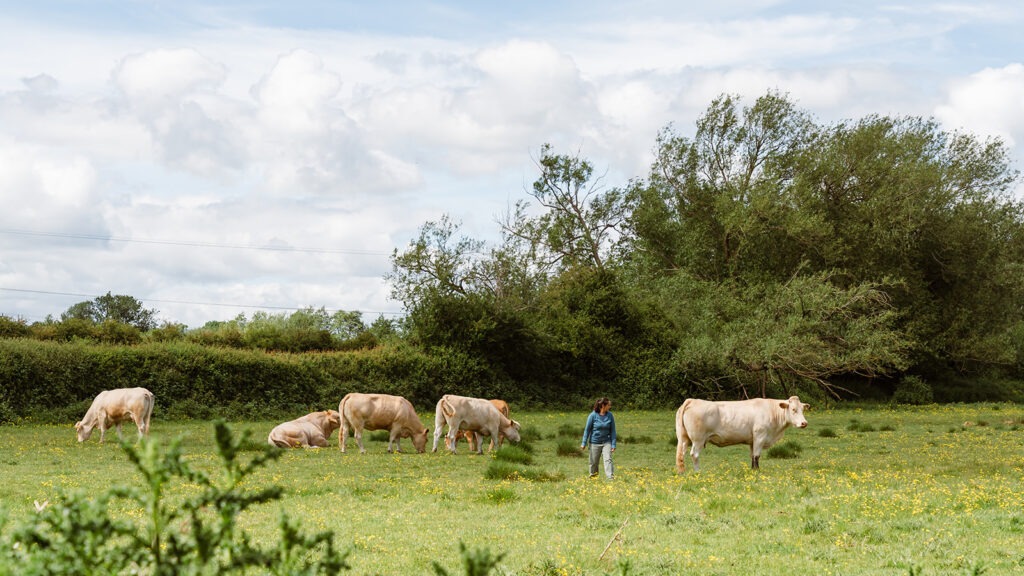
However, with lack of rainfall the river level was extremely low. Our cattle were also starting to run out of grass and they started pushing boundaries. They crossed the river, pushed the admittedly rubbish fence over and got into my willow bed. (Usually they can’t, or at least they don’t, because they are happy and have enough to eat). They thought they were getting into the Long Pinsley, the field we were saving to cut for hay on the other side of the river, but my willow bed happened to be between them and the grass.
I was on holiday in Scotland at the time, so didn’t hear about all of this until I came home! But it was only for a short period of time apparently, as there was a lot of shouting to others that hadn’t ventured across the river and they were moved back pretty quickly.
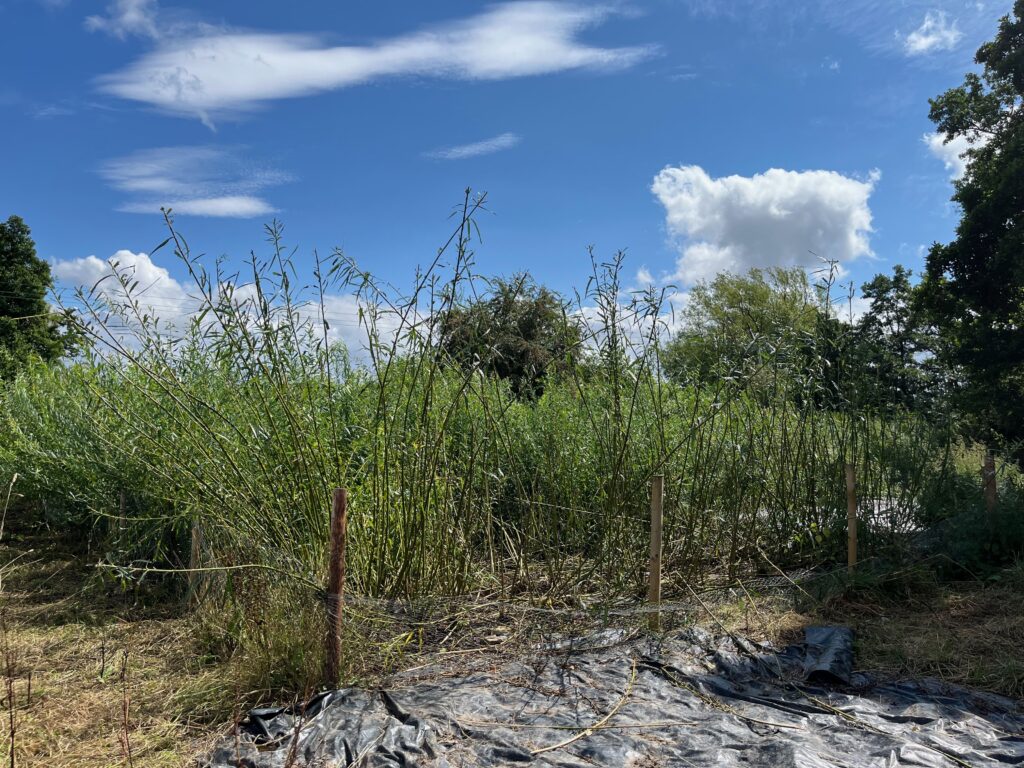
A few weeks later I went to see how it was recovering, twisted my ankle climbing over a gate and spent a few weeks on crutches so left it then until the leaves dropped!
The chicken wire fencing around the bed was damaged and there was evidence of where they had moved through the willow. There were patches of bent branches and some had already started to die off. I considered cutting these, but most was still in leaf and taller than me. I also didn’t have the time due to orders and commissions. It would have taken ages and whilst my willow was damaged, our bull had cut his foot on barbed wire during this escapade so that was more pressing to attend to. I knew my willow would recover next year because all it wants to do is grow. But Podrick needed a few months of twice daily care in the shed. So I left it, repaired the fences and hoped for the best.
Harvest 2026: Successes and Challenges
Successes
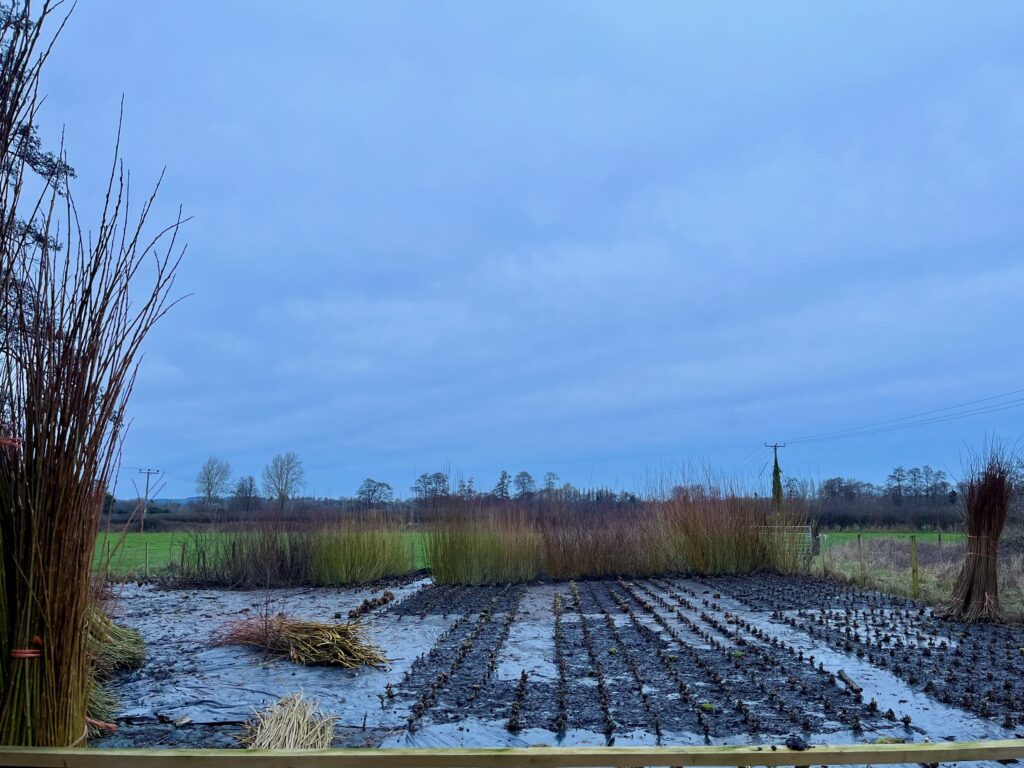
I didn’t know what to expect from the harvest this year because in the summer it looked worse-for-wear. But once the leaves had dropped and I came to harvesting, I happily found that it wasn’t that bad. There were sections that the cattle hadn’t walked through, such as the Dicky Meadows, Norbury and half the Brittany Green were untouched. This was a relief as they are my most used willows.
Even in the areas closest to the fence they damaged and willow they walked through, luckily most stools are intact. Some rods had been torn from the main stool, leaving a bit of a tear, but these have since healed. There is no sign of any pests or disease. But I cleared the leaves and swept the ground around them, like I always do, just in case.
Surprisingly, their big heavy hooves didn’t damage the plastic membrane either, so that’s good!
Challenges
The worst affected area was the second bed, planted in 2024 with cuttings from my first year’s harvest. As this was only metres from where they had crossed the river, I expected that. There was also more cow poo than I thought there would be! So I spent a few days, cutting and disposing of all the damaged material this year.
As such, my overall yield is smaller this year due to the rods from the damaged willow bed not being useable. I have some stock from last year, but it is not all suitable for weaving. So I will probably still need to buy some willow from commercial growers this year. I still hope to be self-sufficient in my brown willow in the next year or two, so watch this space.
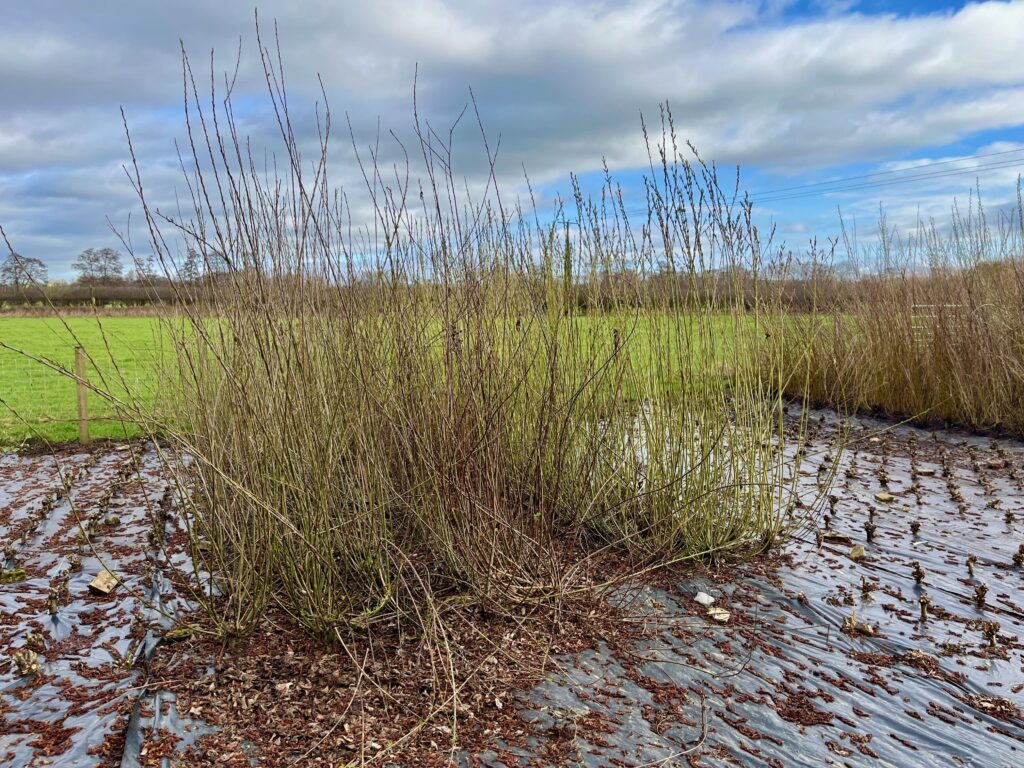
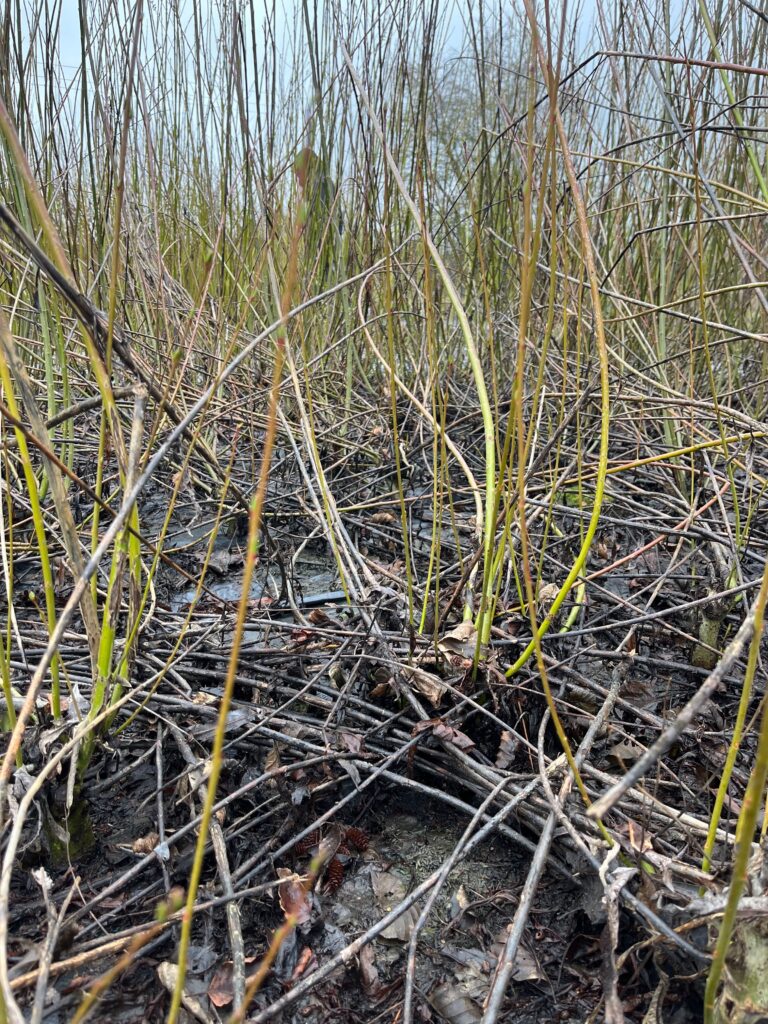
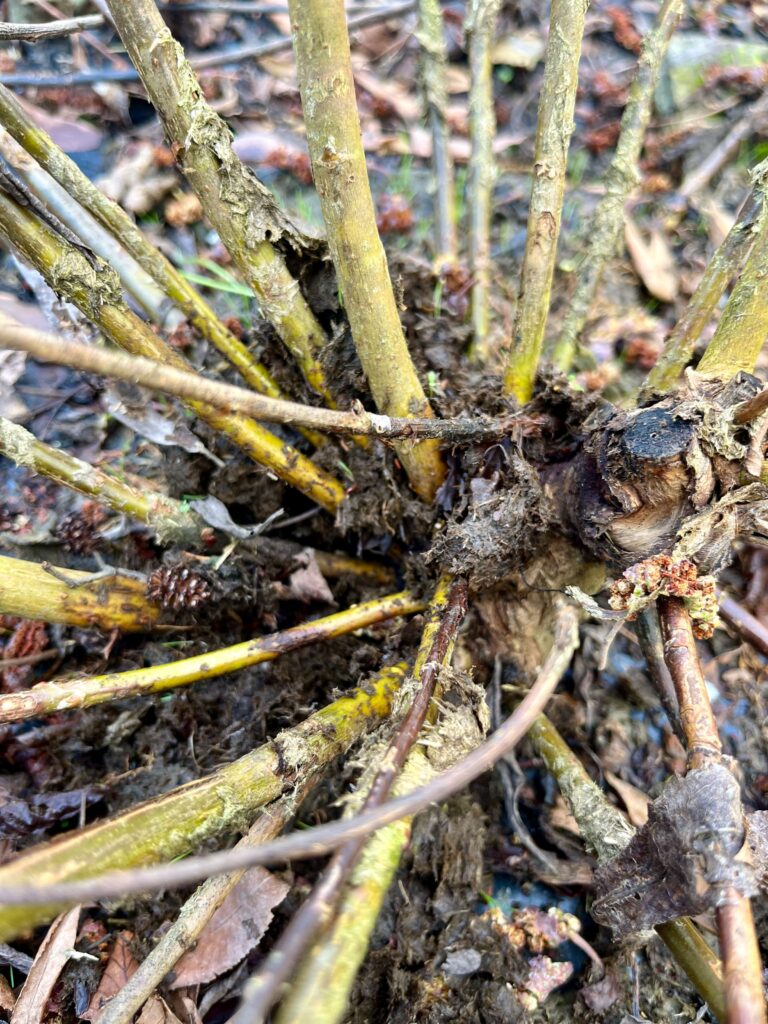
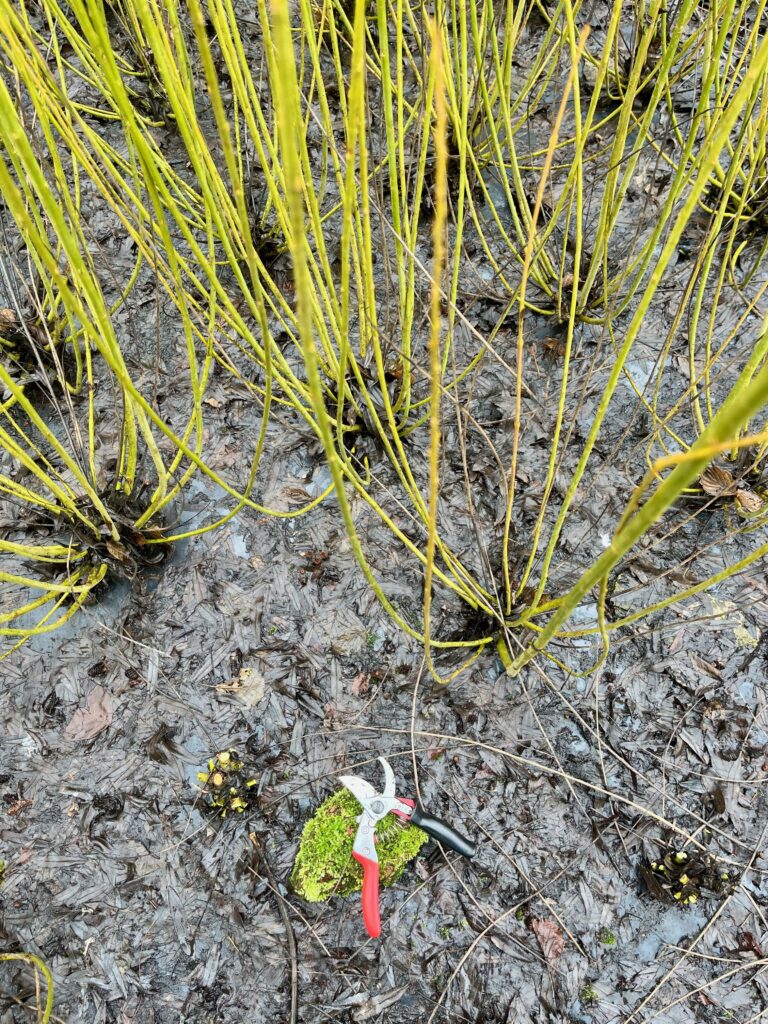
Comparing to previous harvests, I do think the drought stunted some growth of my willow. The crop is certainly thinner and shorter than last year. Which for me, is actually better for weaving coffins and baskets, as I don’t use many of the chunkier varieties.
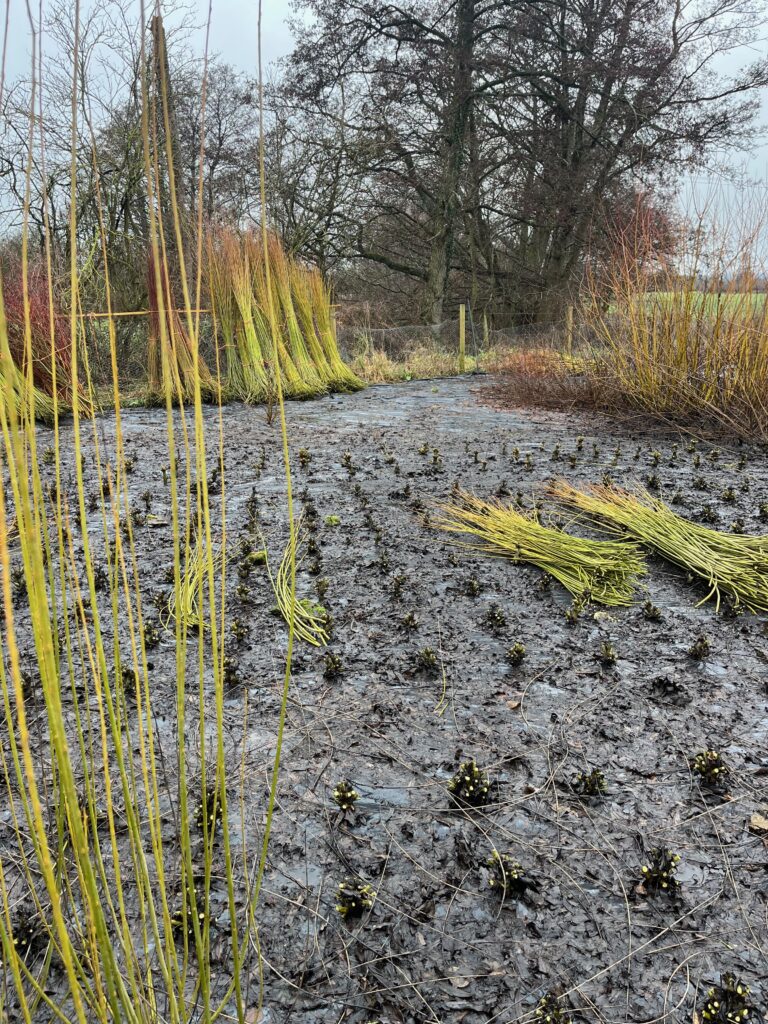
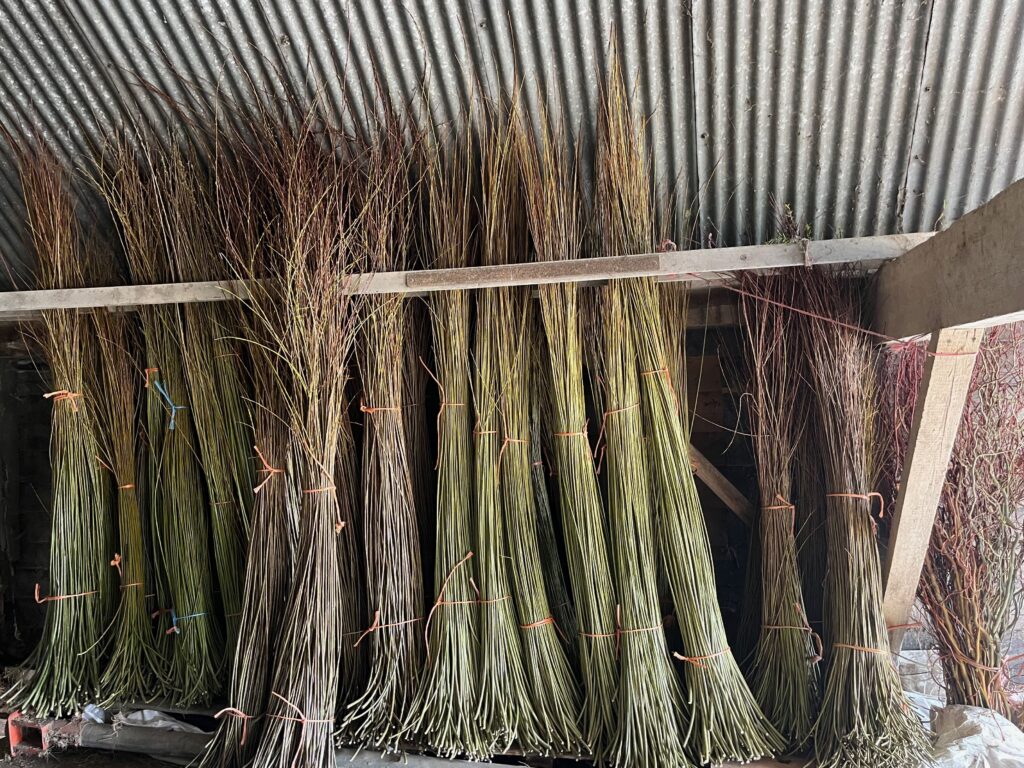
Pictured below is my Dicky Meadows, which is lovely and slender this year. I am really happy with the number of bundles I got this year. (You can see some of it tied up leaning against the fence – the brighter green variety on the right and that was when only half of it was harvested.)
Conclusion and Looking Ahead to Next Season
As of April 2026, I have successfully managed to move all of my willow from the field and store it inside to dry. However, it felt like a long process, as there was the damage and cleaning up to do. Plus cutting it all by hand with secateurs is very time consuming. Over the space of three months, my partner and I cut the willow and completed all the other maintenance jobs. (Sweeping, making holes bigger and reinforcing fences.)
I am happy to report that the stools have come back with vigour. 99% of stools have new growth this year. They are showing no signs of the summer’s damage and the promise of a good harvest in 2027. It would be great to be fully self-sufficient, growing all of the willow needed for my coffin and basketry needs. So fingers crossed!
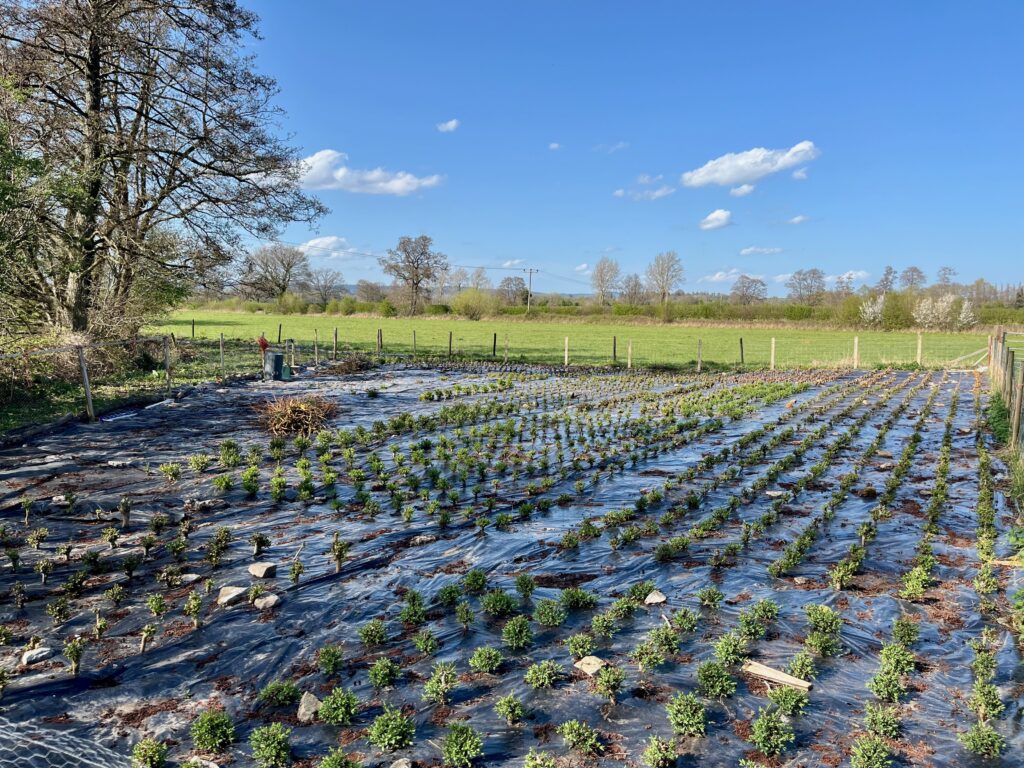
Finally, I am all caught up with the harvesting and other jobs that go along with it. I’m planning to spend more time down in the willow bed, weaving and working this year. It is a really nice area! I’ve also bought a new strimmer to keep on top of the nettles that grow around it, which will certainly help.
As always, if you have any questions please send me a message or leave a comment. I would love to hear what you think.
Thank you for reading.
Steph
Join the Wegnalls Willow Mailing List
Sign up to the mailing list for updates on new blog posts, upcoming events, and other weaving-related news.
(I send emails occasionally, and only when there’s something meaningful to share.)