
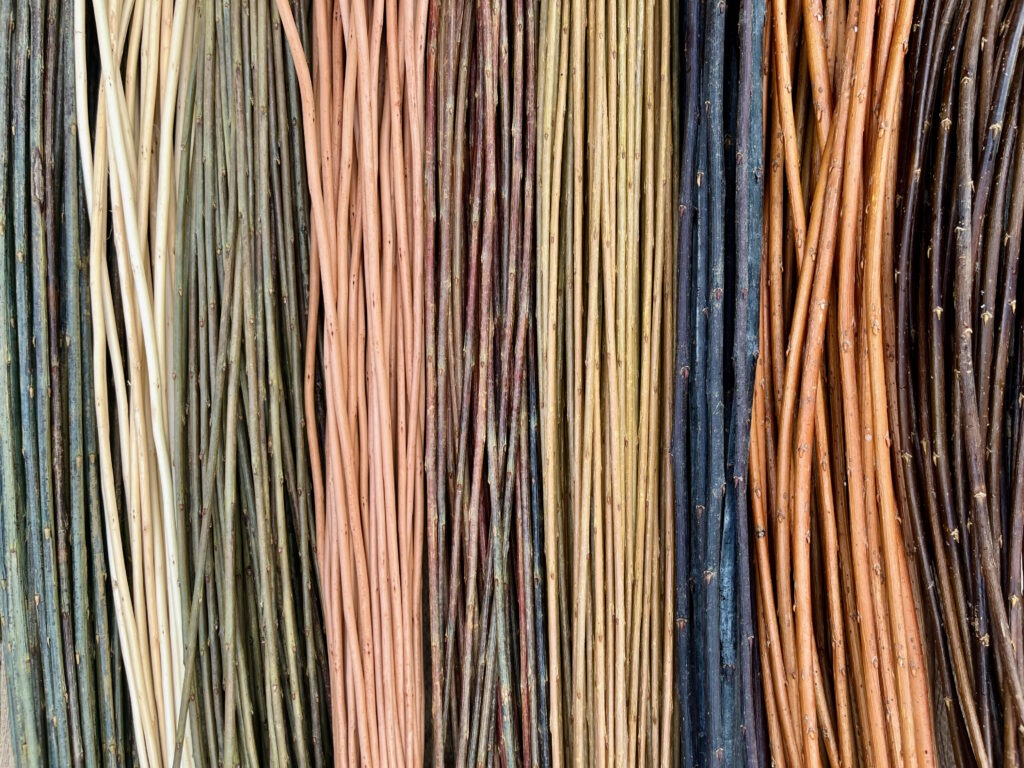
What are the different Types of willow you use?
I use a mix of buff and brown willow in my willow coffins, along with some white willow. But what is the difference? Read on to find out more.
Buff willow
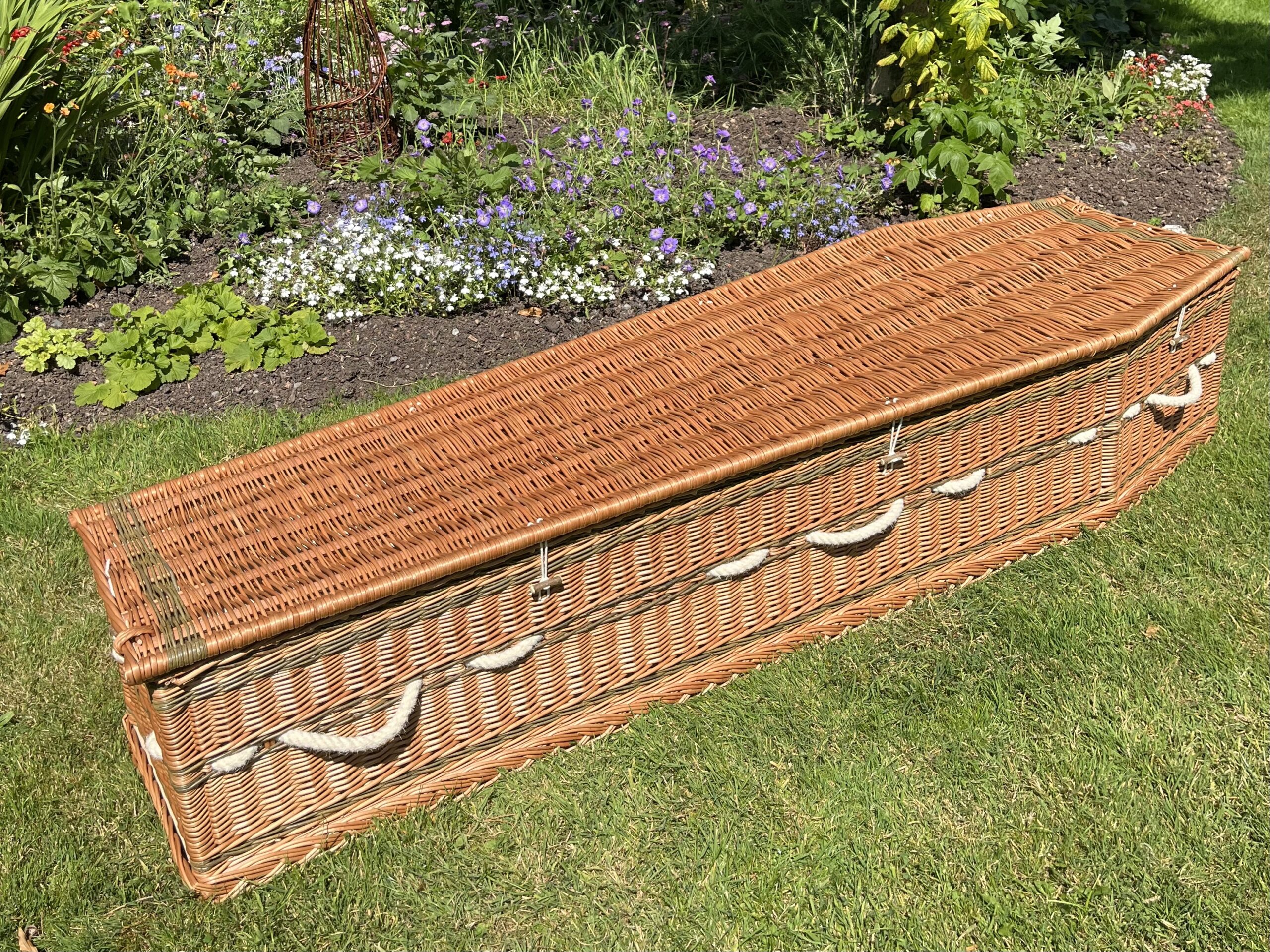
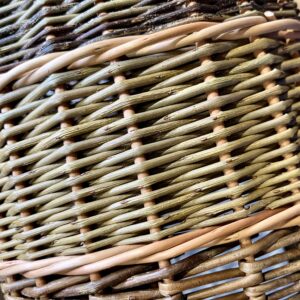
- Buff willow is made from Somerset willow that has been boiled, stripped and dried.
- By boiling the rods with their bark on, the tannins soak into the core of the willow rod. Once the loose bark has been stripped off, it leaves a toffee colour rod which is smooth to the touch.
- It is quite an intensive process requiring specific machinery, which is why I purchase it from a number of willow suppliers in Somerset.
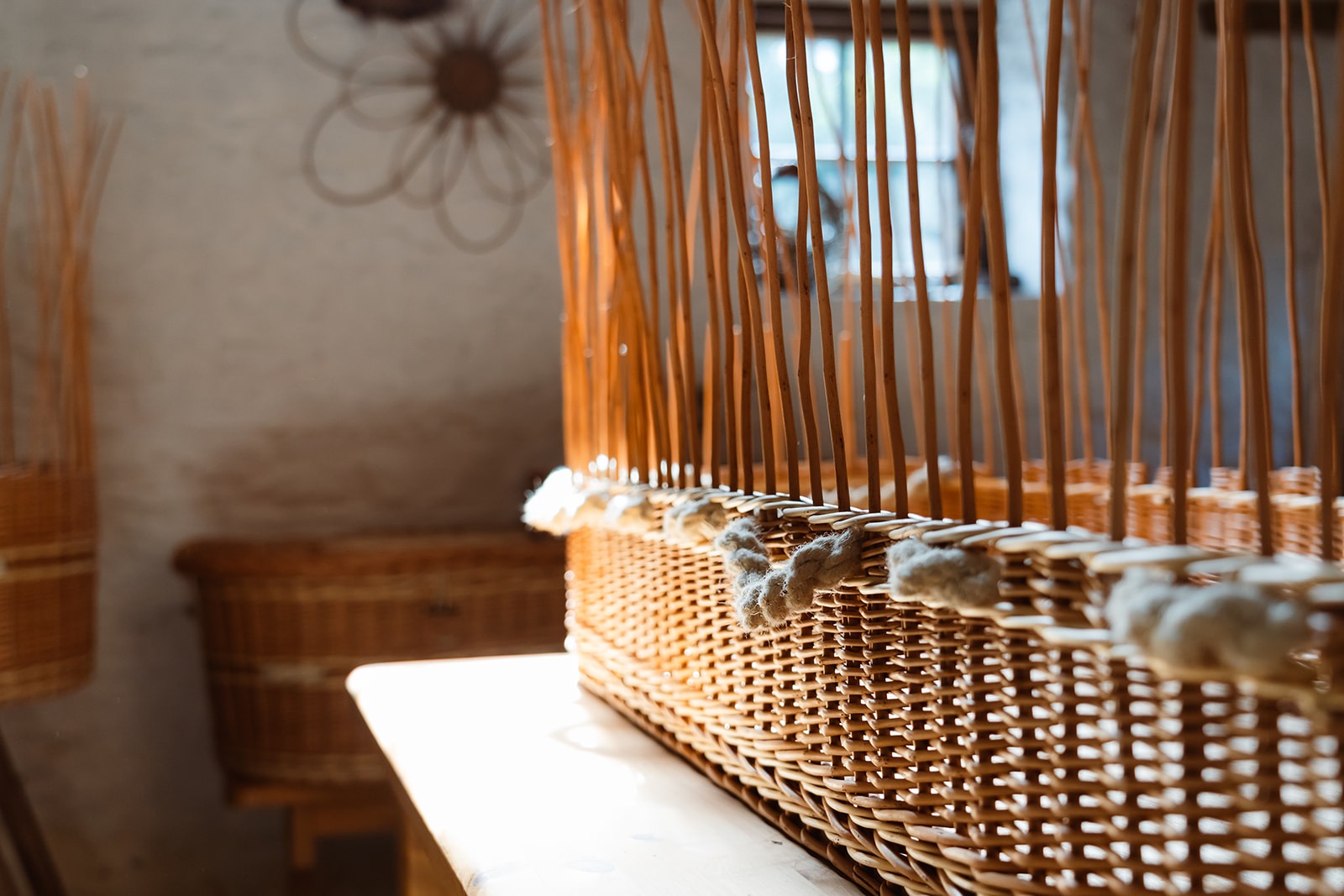
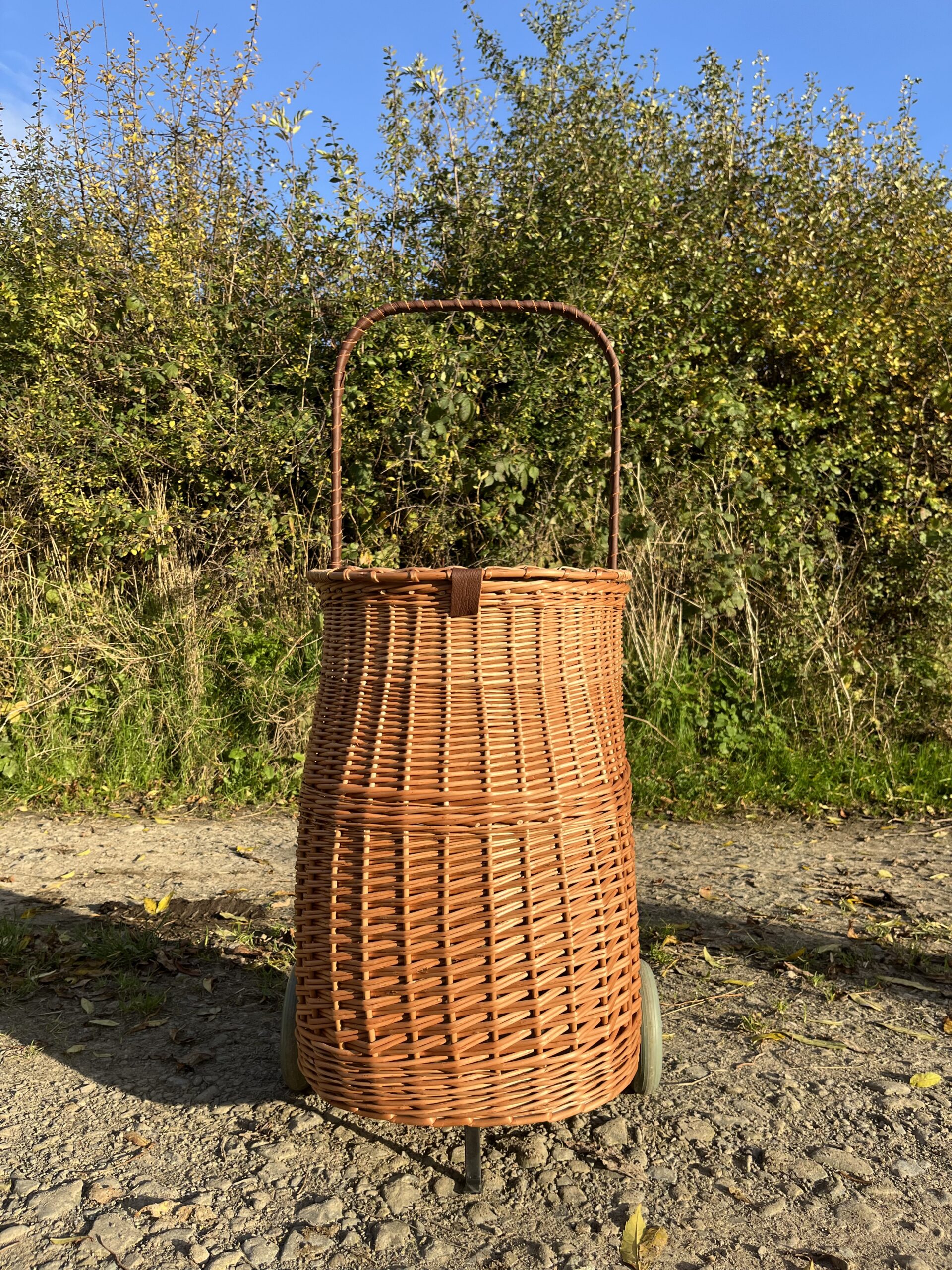
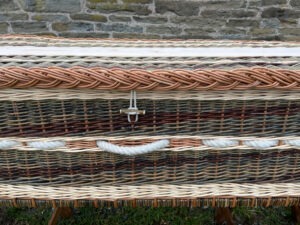
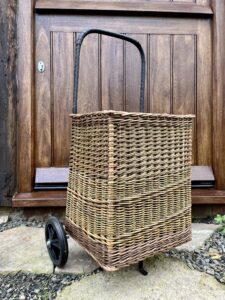
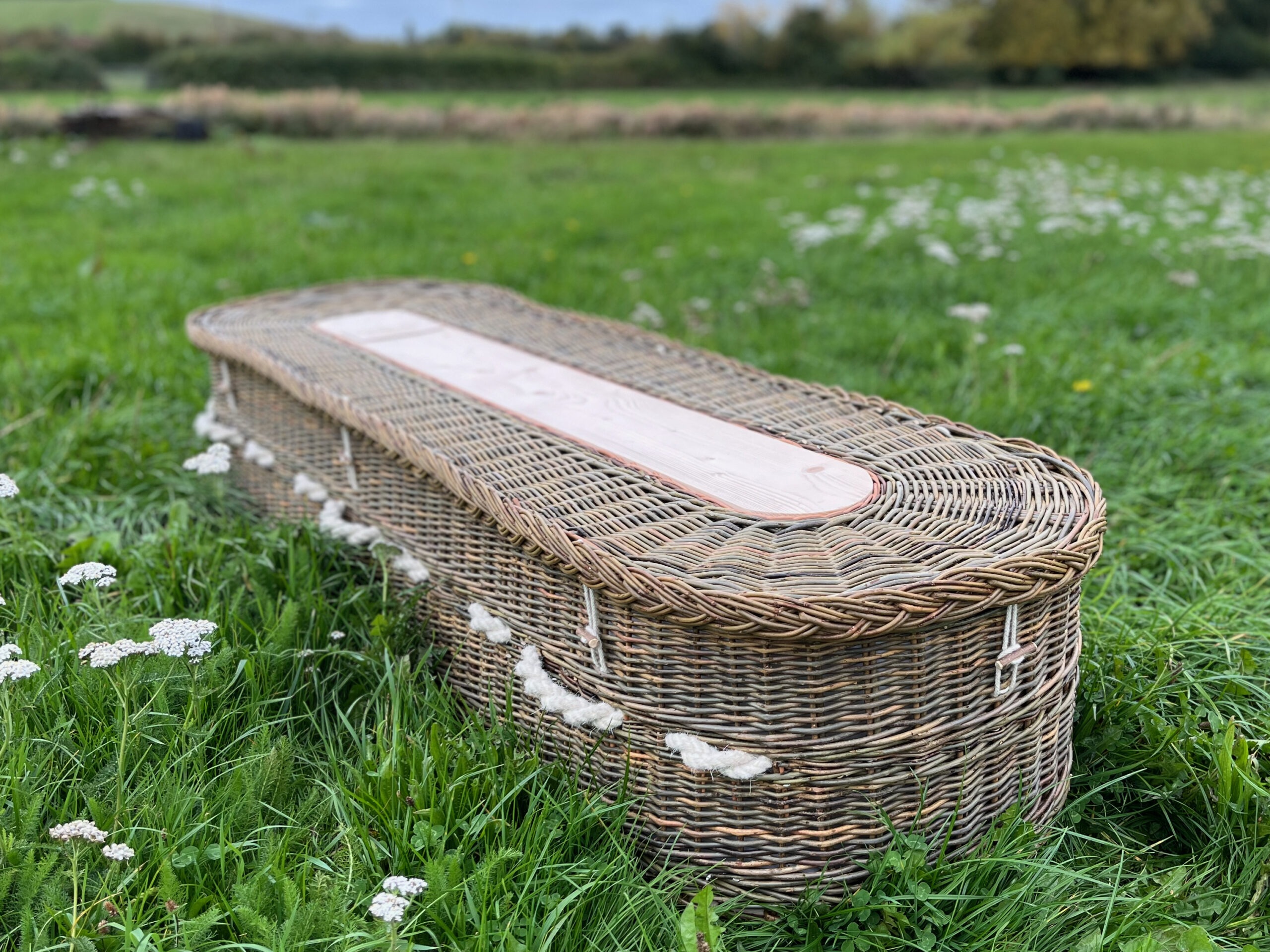
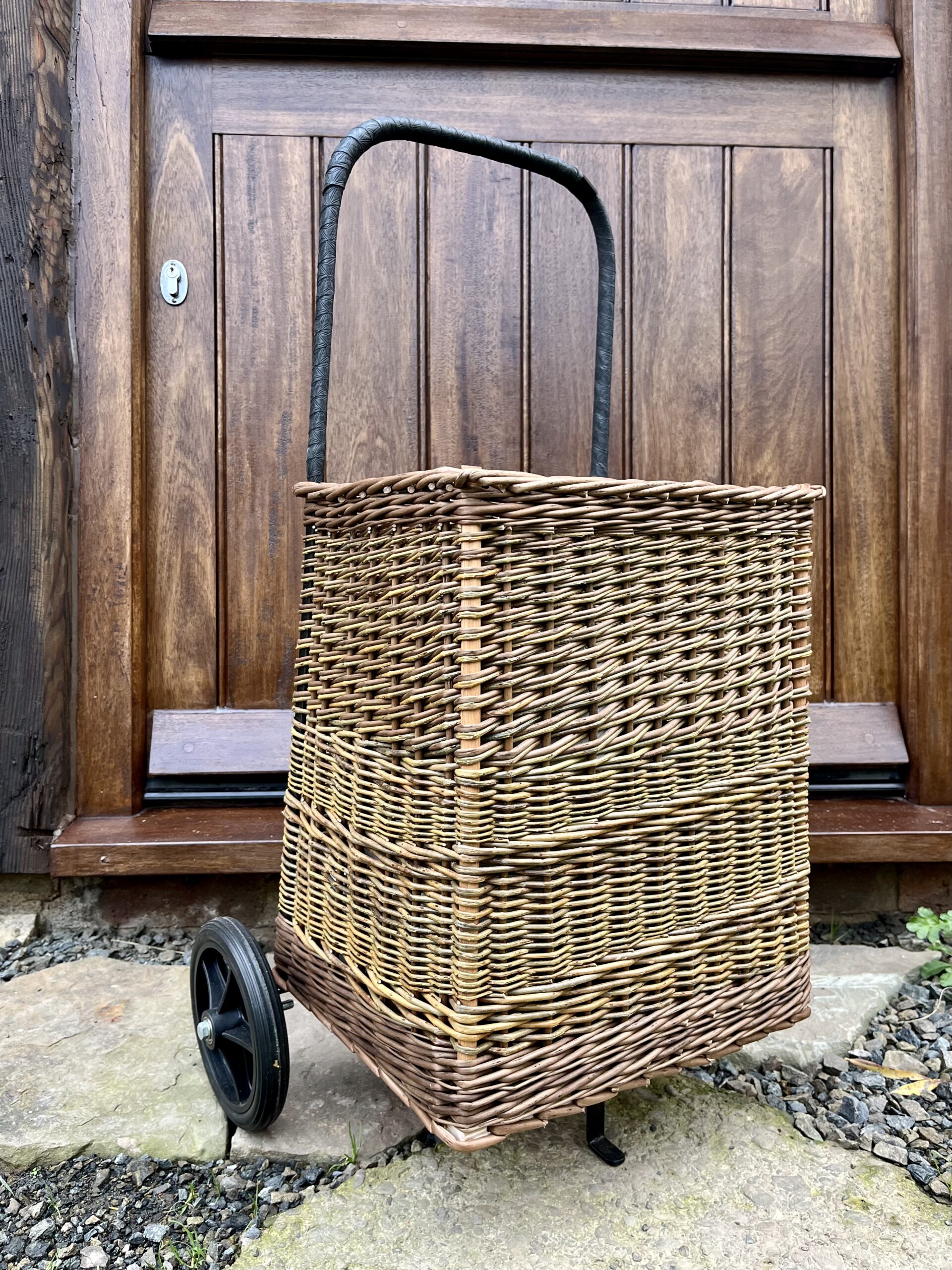
- Finally buff willow is what traditional ‘wicker’ products would have been made with, as shown in the buff coffins and shopping trolley below.


White willow
- White willow is made from willow that has been cut in the winter and left to stand in water, usually until May when the rods have started to bud.
- Once the sap rises in the rod and they’ve started to grow, the bark can be peeled. This can be done by machine or hand.
- By stripping the bark, it leaves the creamy white willow core.
- As it is only made in Spring with freshly cut rods, it is in limited supply, labour intensive to produce and the most expensive willow to purchase.
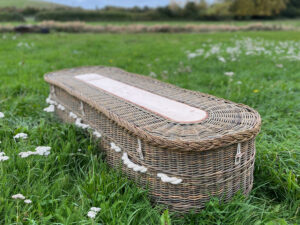
- I mainly just use it for stripes of white, as shown in the coffin below.
- It works well with both buff and brown willow to add contrast and interesting lines.

Brown willow
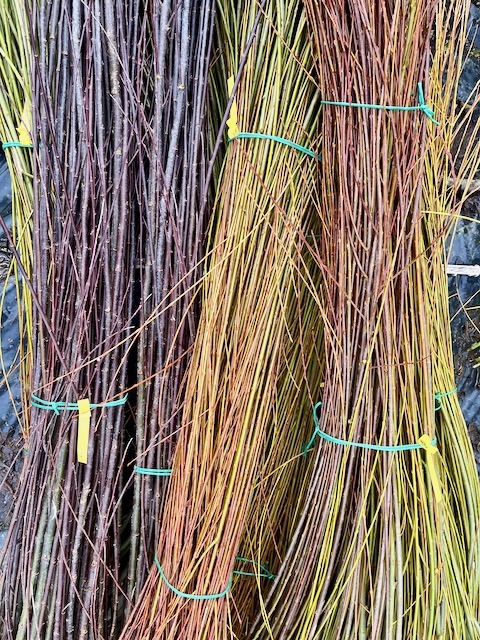
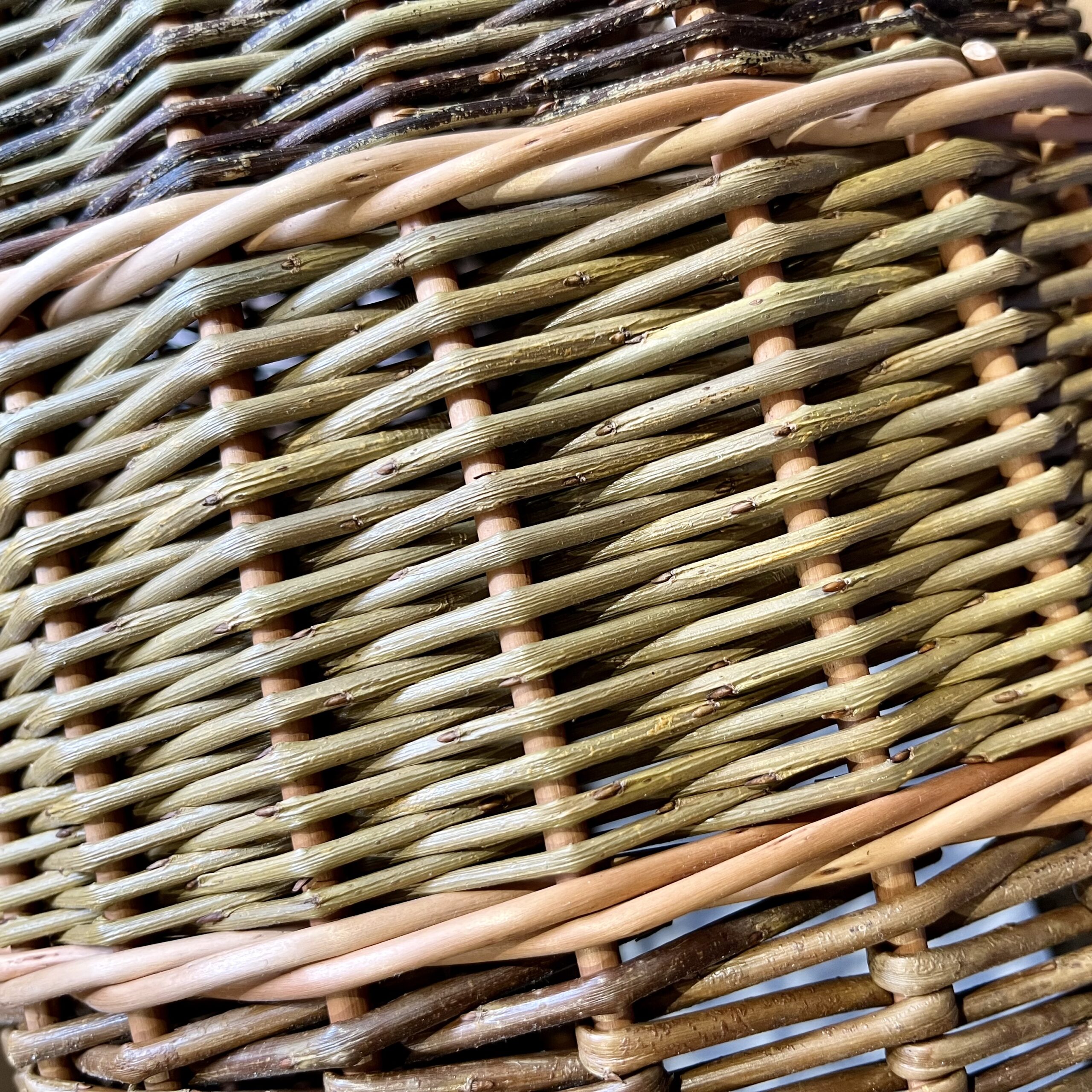
- Brown willow is used to describe willow rods that have been dried after harvesting.
- They are not all brown though. Colour ranges from brown to green, yellow, red and purple. Being a natural product, the colours can vary even in the same willow rod! For example, Brittany green isn’t just green. It’s generally a dark green / red / brown colour.
- Brown willows still have their bark attached, rather than the stripped willows above. As such, these are generally darker, more natural looking and have a more natural texture than the stripped willow.
- I grow, harvest and dry 20+ different varieties of willow, so there are lots of different colours, shades and textures of willow to choose from. (Varieties are dependant on seasonal availability.)
- Additionally, you can read more about the planting process or harvesting my 2026 crop here.


Do you have any questions? Want to know about the current willow varieties that I have available to weave with?
Please get in touch or leave a comment. I look forward to hearing from you.
Join the Wegnalls Willow Mailing List
Sign up to the mailing list for updates on new blog posts, upcoming events, and other weaving-related news.
(I send emails occasionally, and only when there’s something meaningful to share.)